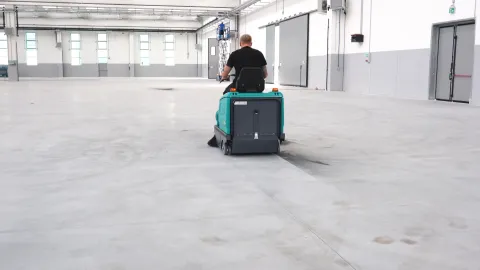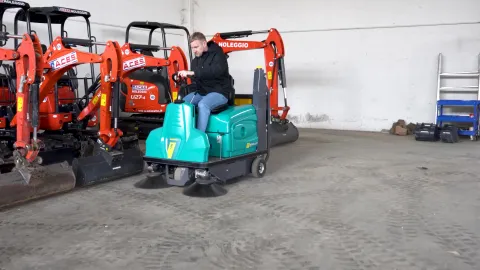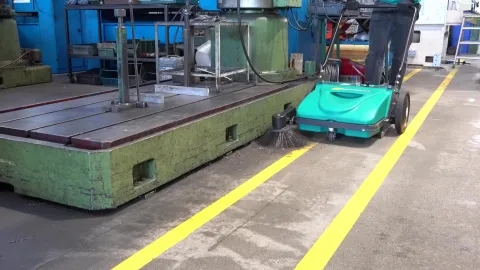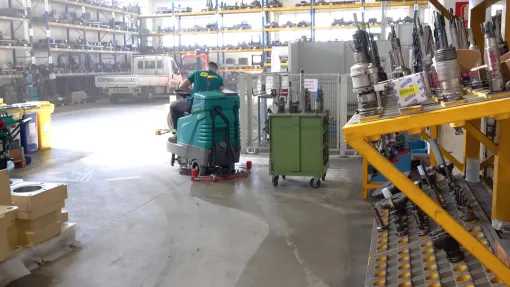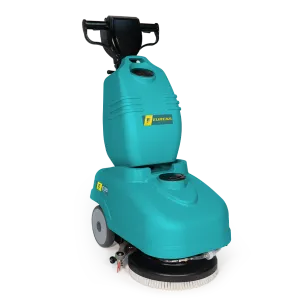


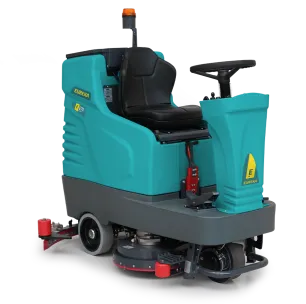

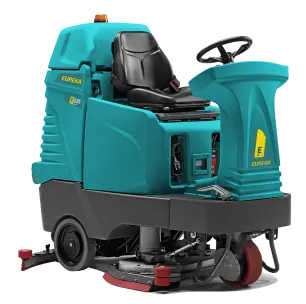


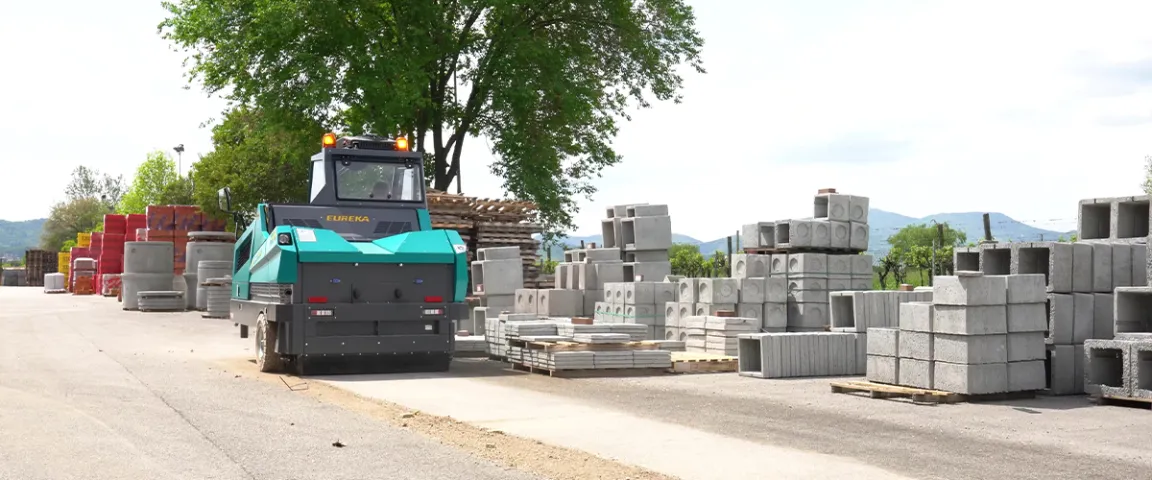
Choosing the right cleaning equipment plays a vital role in preventing the build-up and spread of hazardous dusts in industrial environments. Eureka’s industrial sweepers and scrubber-dryers provide specific solutions for collecting and removing the dust that accumulates on floors, helping to prevent its return to the air, and complementing other preventative measures in the workplace.
The substance of INAIL’s 2026 “Technical guide on hazardous dusts”, and how to choose the most suitable cleaning systems for industrial environments
The dust to be removed from industrial environments is often more than just dirt. In certain production processes, dust can pose a genuine risk to workers’ health and safety, particularly if it contains hazardous substances or particles that are fine enough to remain suspended in the air and be inhaled.
This is the subject of the 2026 “Technical guide on hazardous dusts”, published by INAIL with the collaboration of CONFIMI Industria and AFIDAMP-FINCO. The guide focuses on “Strategies and technical measures for containing and removing hazardous dusts in the workplace”.The document examines risks and regulations along with dust collection, suction and filtration systems, and also highlights a particularly important principle for all those involved in professional cleaning: where dust generation cannot be eliminated at source, it is essential to stop dust spreading and to remove build-ups by means of appropriate cleaning procedures and equipment.
Hazardous dusts: a risk affecting many sectors
The data published in the guide show just how significant the problem of dust is. The sectors most directly affected by cases of recognised occupational disease attributed to dust are: construction (46%), agri-food (24%), timber (11%) and metalworking (10%). Not all dusts, however, are the same. Variations in particle size, concentration, composition and chemical and physical properties lead to different levels of risk. For this reason, the guide repeatedly emphasises the need for specific risk assessment to identify the prevention and protection measures best suited to each individual workplace.
The first rule: control dust at source
The primary objective must be to prevent, as far as possible, dust from being released into the environment.
Where it is simply impossible to eliminate the production of dust, the guide recommends the installation of ventilation, filtration and collection systems at the source in order to minimise the concentration of breathable contaminants in the air.
Tackling the root cause does not, of course, solve the problem entirely.
Preventing dust from building up on surfaces
One of the most interesting sections in the guide specifically addresses the need to establish cleaning procedures using appropriate equipment, with the aim of preventing the build-up and accumulation of dust.
This principle is extremely important: do not wait until dust has built up to the point of becoming clearly visible before taking action.
From an operational perspective, this means establishing a regular cleaning regime consistent with the identified level of risk, and taking action before a significant quantity of dust accumulates.