


It’s impossible to tell a good industrial sweeper just by looking at its technical specifications
Choosing an industrial sweeper for a building site or a builders’ merchant is a very different matter from choosing one for other work environments.
In the construction sector, cleaning staff have to cope with constantly changing conditions. Cement and gypsum dust, sand, crushed stone, and fragments of brick and concrete are often encountered in the same area and are constantly being moved around by passing lorries, forklift trucks and construction vehicles.
Similar challenges are to be found in builders’ merchants, and in warehouses and storage areas for building materials, where constant loading and unloading operations generate dust and debris that requires frequent cleaning.
For this reason, knowing a machine’s cleaning path width, hopper capacity or stated productivity is not enough to determine whether it will actually be suitable for day-to-day work.
Such specifications may describe a sweeper, but they do not explain how it will perform when it has to suck up fine dust for hours on end, pick up heavy debris or maintain the same level of performance on uneven surfaces.
The question you need to ask yourself is a different one:
What enables an industrial sweeper to continue cleaning effectively even when conditions become difficult?
The answer does not lie in any single component, but in the design of the machine as a whole.
To understand this better, let us examine the four challenges that have the greatest impact on cleaning efficiency in the construction sector, and look at which design solutions can make a difference.
Dust: the main enemy of efficiency
When thinking about the cleaning requirements of a building site or builders’ merchant, attention often focuses on the most visible debris. But in fact, the most difficult problem to deal with is most often dust.
Cement and gypsum dust, for example, consists of very fine particles that easily get stirred up by the brushes during sweeping operations. Some of this dust may be dispersed into the surrounding area, while the part that is sucked in can gradually build up and clog the filtration system.
As the hours go by, this combination of factors can severely reduce the sweeper’s effectiveness.
Neither can the problem be solved simply by fitting a larger filter.
An industrial sweeper intended for use in the building industry must keep dust under control throughout the cleaning process, from the moment it is disturbed by the brushes until it is separated out from the airflow.
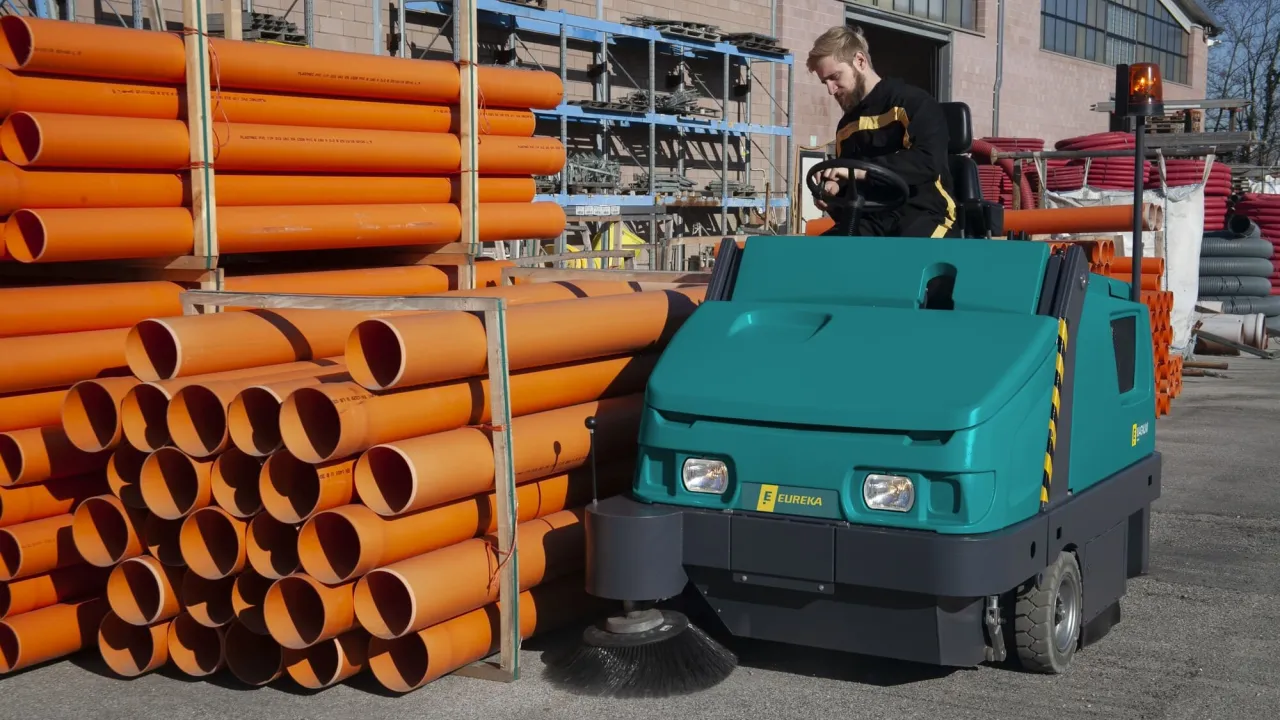
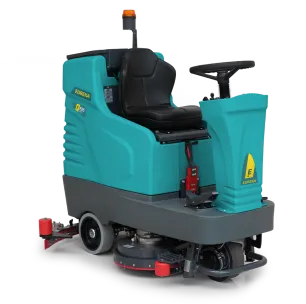
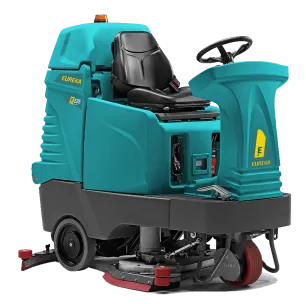
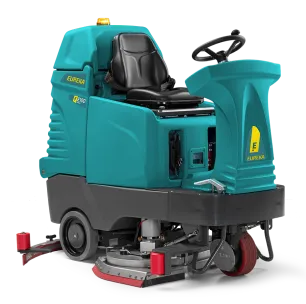
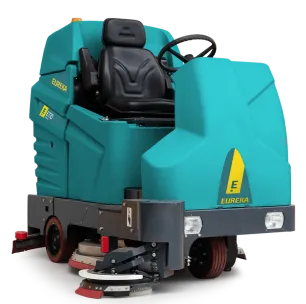
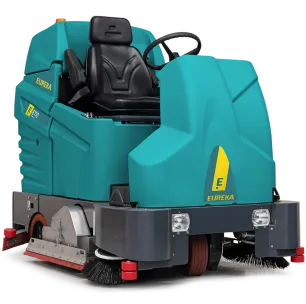
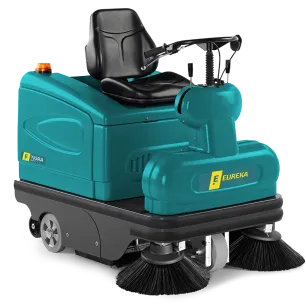
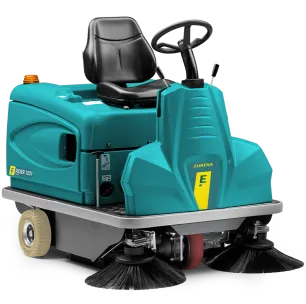
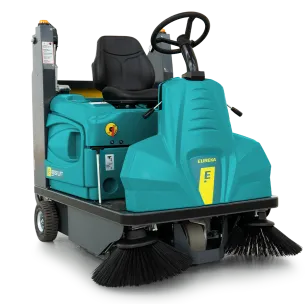
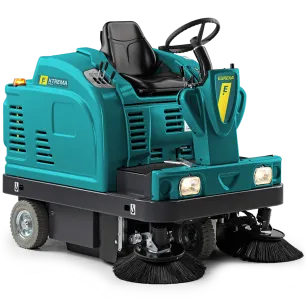
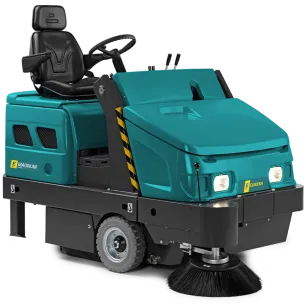
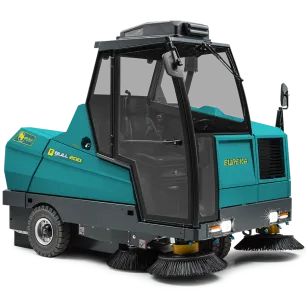
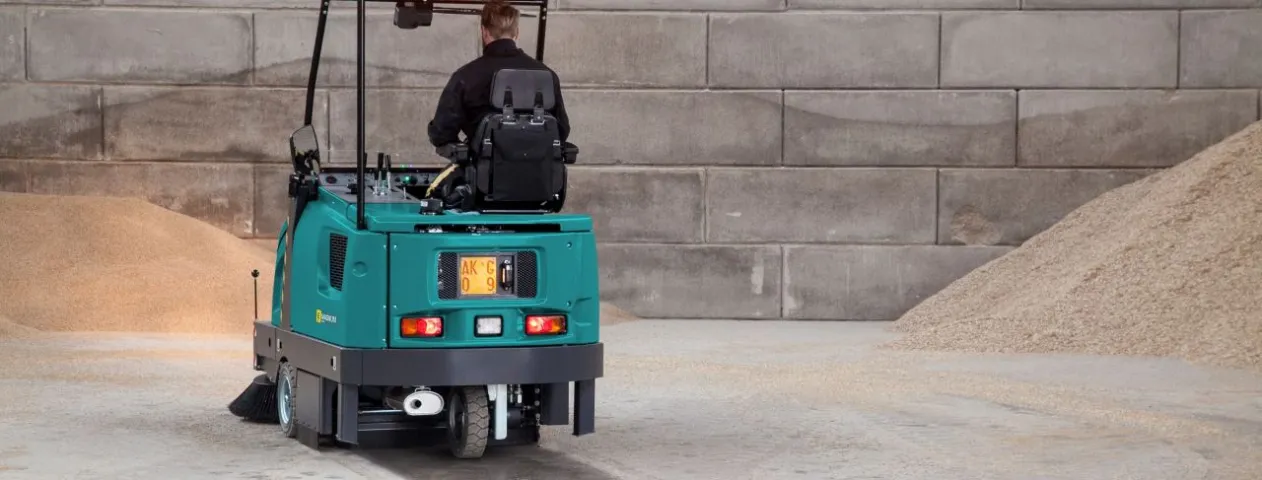
This is the principle on which the Magnum ride-on sweeper is designed.
First and foremost, it is designed not to stir up dust. Eureka’s Magnum sweeper boasts a top-quality sweeping system that helps stop dust from becoming airborne during cleaning.
Even if – despite everything – a small amount of dust is raised by the mechanical action of the bristles on the floor, a whole series of functions come into play on the Magnum sweeper to keep it under control.
Dust guards, available as optionals on both side brushes, help contain the dust particles within the swept area, minimising dispersion even on the very first pass.
Dust guards are also installed around the suction chamber and surround the main brush. This too helps limit the area in which dust can become airborne and ensures that it is all captured by the sweeper’s suction system.
Next, the Multipocket filter comes into play. This advanced pocket filter boasts a large surface area that reduces the risk of clogging. Unlike traditional cartridge filters, the smooth surface of Multipocket filters helps dust detach more easily when the filter shaker is activated, maintaining more consistent suction over time. Furthermore, because the filter is washable and water-resistant, it can be cleaned and re-used multiple times without having to be replaced frequently. The result is a much longer filter lifespan and lower maintenance costs.
An automatic shaker ensures that the filter remains efficient over time. The system activates automatically every time the machine is switched on and off. The filter cleaning cycle removes whatever dust has built up on the filter, maintaining consistent efficiency and reducing the need for manual filter cleaning by the operator.
Where working conditions permit, the Magnum can also be equipped with dust-abatement spray nozzles to minimise the dispersion of particles during sweeping. It is, however, important to consider the type of dust present: in the case of cement, lime or gypsum dust, the use of water could lead to the formation of compact deposits that are extremely difficult to remove. Spray nozzles should therefore only be used when dealing with compatible dusts.
Considered individually, these features might appear little more than technical characteristics.
In fact, they operate as a single, combined system.
While each component plays its part at a different stage of the process, they all share a common aim: to keep the dust collection system fully efficient even over prolonged cleaning sessions.
This is what makes the difference between a sweeper designed from scratch to cope with construction site conditions and one intended for less demanding applications.
Debris: the problem isn’t collecting it... it’s continuing to collect it
While dust puts the suction system to the test, debris can interrupt the cleaning session.
In the construction industry, a sweeper does not collect just one type of material. In the course of a single day, it may need to pick up everything from sand and gravel to fragments of brick, concrete and other forms of debris produced by construction, handling and storage activities.
This variety of material makes cleaning in the building sector much more demanding than in other industrial settings.
For this reason, a large hopper capacity alone is not the solution.
The question you need to ask is a different one:
Can the machine maintain its productivity without having to stop work often?
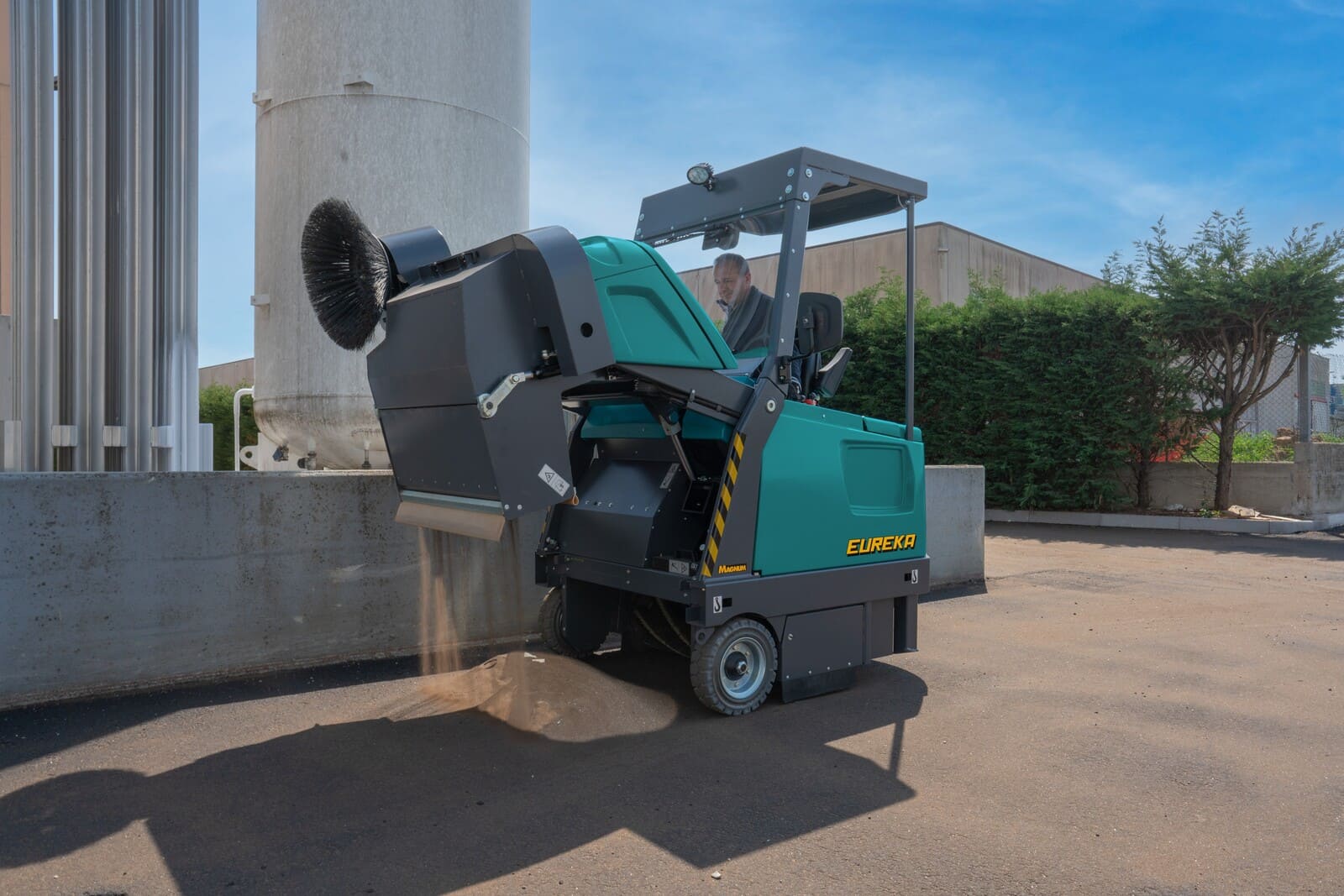
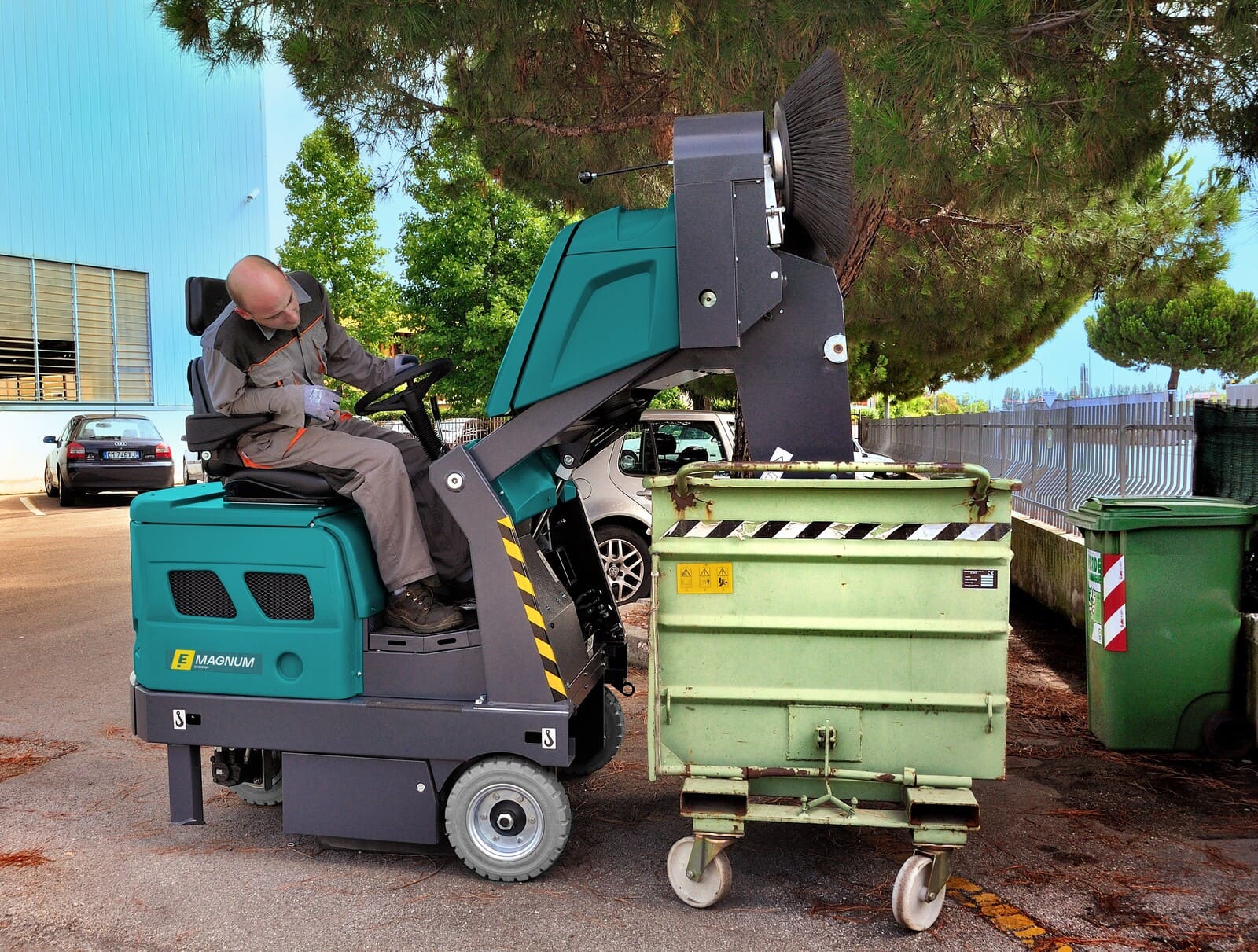
To meet this requirement, the Magnum ride-on sweeper features a front loading system. This design solution is particularly effective at collecting medium and large pieces of debris. Thanks to the direction of rotation of the main brush, debris is thrown directly into the front-mounted hopper, resulting in more efficient collection than with conventional overthrow systems.
A floating hopper facilitates the collection of materials with different characteristics.
Its high capacity also allows a large amount of debris to be collected before the hopper needs to be emptied.
When the hopper is full, a hydraulic system empties it quickly without the operator having to get off the machine, thereby minimising downtime.
Here too, it is not the individual components that make the difference, but the way in which the various solutions combine to keep operations running as smoothly as possible, even when conditions are constantly changing.
Uneven surfaces: the standard of cleanliness must remain consistent
In the construction industry, it is not enough for a sweeper simply to collect debris effectively. It must also be able to continue doing so when floor conditions change.
Construction sites, builders’ merchants and material storage areas often have uneven floors with joins, dips and damage caused by the constant movement of vehicles. Under such conditions, brush pressure on the floor changes constantly and, if the machine is unable to adapt, cleaning quality can easily deteriorate.
To complicate matters further, there is the issue of brush wear. As time goes by, particularly on abrasive surfaces, sweeper performance may decline simply because the collection system is no longer operating under optimal conditions.
A sweeper designed for such environments must therefore be able to do two things: adapt to uneven floors and maintain cleaning efficiency over time.
In the Magnum ride-on sweeper, this objective is achieved through the combination of several solutions.
The wheels are fitted with super-elastic tyres to improve stability, even on uneven surfaces.
The self-levelling MultiBristle brushes are designed to gradually compensate for wear and therefore to maintain a constant pressure on the floor.
The thick, painted steel frame, designed and manufactured in-house by Eureka, is robust enough to withstand the stresses typical of construction industry environments. These design features combine to keep the machine fully functional over time, even when subjected to collisions, vibration and heavy-duty use.
When the time comes to change components, the tool-free replacement system ensures that efficiency can be restored rapidly and with minimum downtime.
Here too, the true value lies not in any single solution, but in the overall result: a high standard of cleanliness that remains consistent even when working conditions are far from ideal.
Heavy-duty applications: productivity also depends on continuity
In the construction industry, a sweeper doesn’t just operate in dusty environments.
It also works under conditions that constantly put its strength to the test.
Accidental collisions, abrasive materials, constant movement and challenging floor surfaces are all part and parcel of daily operations on construction sites and in builders' merchants.
In these environments, the problem is not simply to find a robust machine.
The aim must be to minimise the risk of working conditions interrupting cleaning operations.
This is why the Magnum ride-on sweeper is also available in a Total Steel version, in which those structural components most exposed to stress are made of steel.
This unique solution does more than add another item to the technical specifications.
It is an important design feature that makes the machine better suited to the heavy-duty cleaning work typical of the construction sector, and keeps the machine fully functional even when used daily in the most demanding conditions.
Robustness is not therefore the ultimate goal.
Rather, it is just one of the tools used to ensure continuity of cleaning.
How to choose the right industrial sweeper
Now that we have looked at the main challenges presented by the construction sector, we need to consider one aspect that is often underestimated.
Technical specifications are important, but they only tell part of the story.
Cleaning path width, hopper capacity and declared productivity may help compare two different models, but they do not explain how either will perform after many hours of work in the presence of cement dust, heavy debris and uneven floor surfaces.
For this reason, before choosing an industrial sweeper, it is always worth asking yourself these questions.
How is dust contained during sweeping?
Is the machine designed to work for long periods without any loss of efficiency?
How does it handle the very different kinds of dirt and debris?
Can it maintain a consistent standard of cleaning even when floor conditions change?
Is its design really suited to the heavy-duty cleaning operations typical of the construction industry?
These questions can help you decide whether a machine is genuinely suitable for use in the construction industry or actually intended for less demanding applications.