




From controlling dust to collecting packaging materials: the characteristics that a sweeper should have for today’s logistics sector, and why the Xtrema was developed to meet these requirements.
There is a big difference between a sweeper that just cleans and one that keeps a warehouse running efficiently.
When choosing an industrial sweeper, it’s only natural to compare cleaning path, hopper capacity, speed, operating autonomy and hourly efficiency. But these figures don’t actually tell you what happens during a typical day, when forklift trucks, staff and loading bays are all at work.
Dirt accumulates constantly in logistics centres: wood shavings, cardboard fibres, plastic film, dust and debris brought in from the outside. Cleaning must therefore be planned to suit the warehouse’s working times, not the other way round.
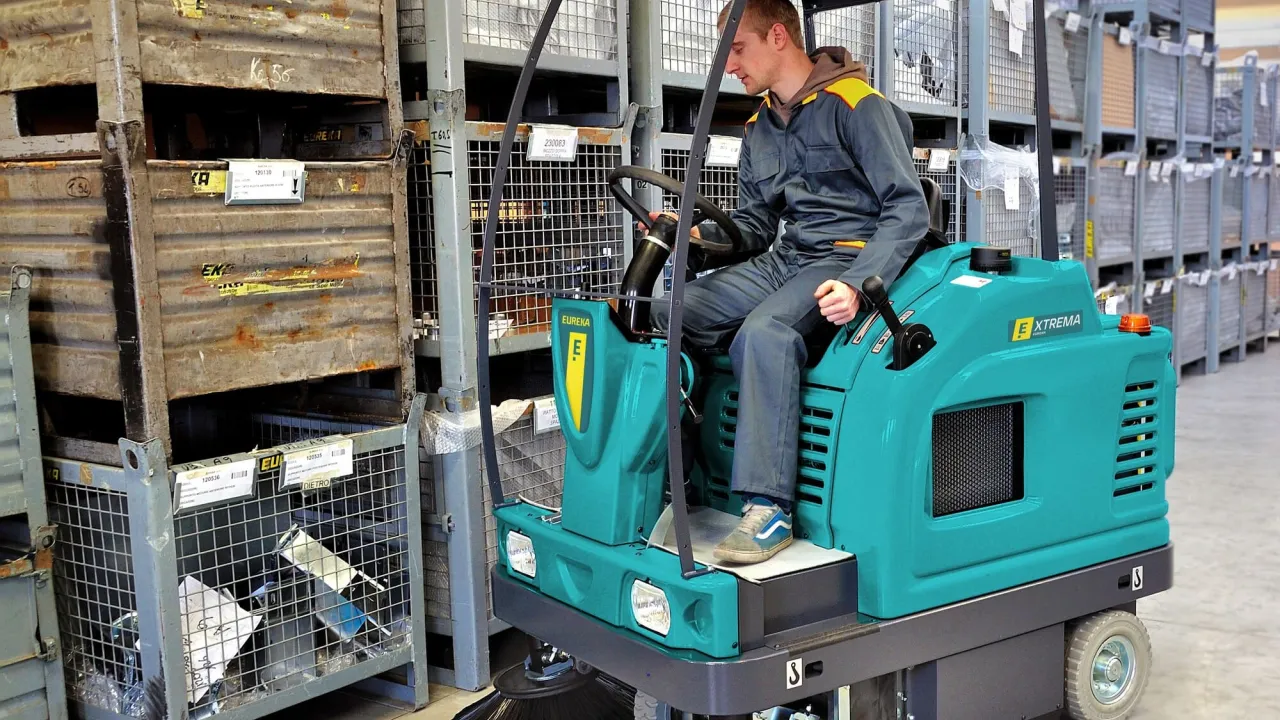
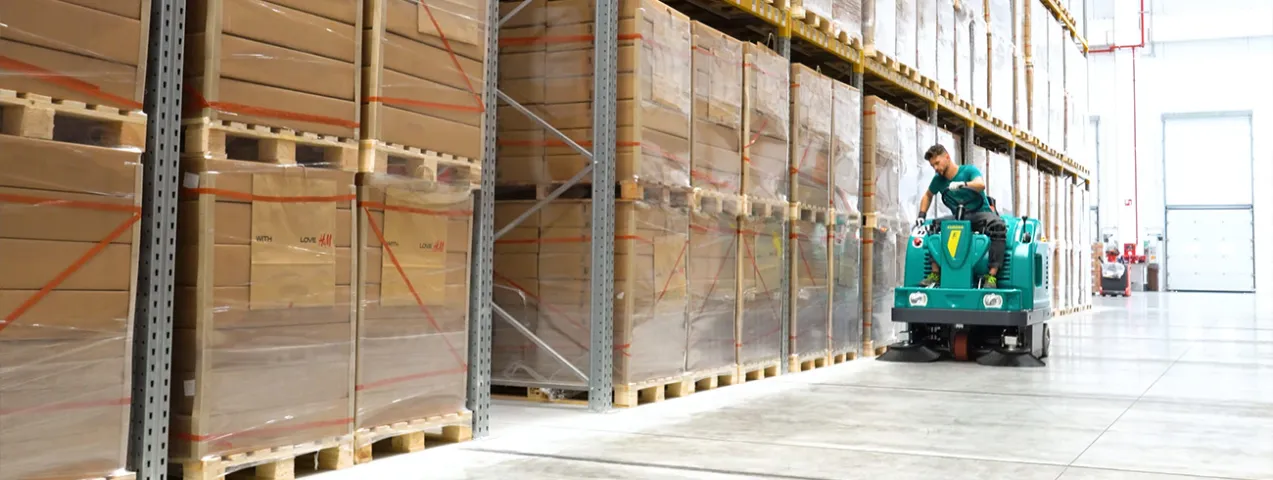
To meet the needs of the logistics sector, a sweeper must perform consistently for hours on end, cope with different types of debris, minimise downtime and manoeuvre easily between racking, through narrow aisles and around picking areas.
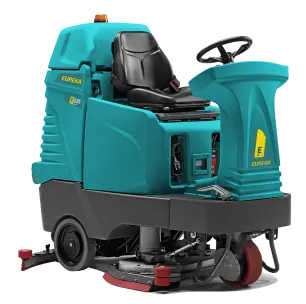
This is the design philosophy on which Eureka’s Xtrema sweeper is based. In fact, every technical solution has been chosen to meet specific operational challenges with the aim of increasing the machine’s effective operating time.
Sweeper productivity does not drop off suddenly. It is lost five minutes at a time.
Drops in efficiency are often gradual: the operator slows down, certain aisles have to be cleaned again, fine dust remains on the floor and the filter needs to be changed. A few minutes here and there, repeated every day, add up to many hours of cleaning lost over the course of a year.
The real difference between one machine and another is not apparent when the filters are clean, but after hours of use, when dust, cardboard fibres and pallet debris put their filtration systems under strain. If the filter becomes clogged, suction is reduced and the number of stoppages increases.
That is why Eureka developed the Multipocket filtration system used on the Xtrema. Its pocket design increases useful surface area and distributes dust more evenly, maintaining high performance even over long shifts.
The advantage is more continuous cleaning, with fewer stoppages and better use of the operator’s time. A productive sweeper isn’t one that cleans a lot in the first thirty minutes, but one that keeps doing so right until the end of the shift.
The perfect floor only exists in brochures.
Expansion joints, worn surfaces and differences in level are common in warehouses. To pick up dirt evenly, the main brush must remain in close contact with the floor at all times.
The Xtrema sweeper uses a floating, self-levelling main brush that adjusts automatically to follow irregularities in the surface. And where there is compacted or heavy dirt, the operator can increase brush pressure directly from the driver’s seat, without having to stop work.
Thanks to the Quick Change system, the main brush can be replaced quickly and easily, reducing scheduled maintenance times and getting the machine swiftly back into service.
Protecting the machine avoids unexpected downtime.
Straps, ropes and twine can easily become entangled in rotating parts and cause damage. It is always advisable to remove this kind of debris by hand, but small pieces can still be picked up accidentally.
To protect its working parts, the Xtrema incorporates SharkCap, a system that protects the hubs when string-like materials reach the main brush. While this system is not designed to collect string deliberately, it does reduce the risk of downtime and unscheduled maintenance.
To see what lies ahead more clearly, we need to redesign what is happening behind.
When dealing with racking, narrow aisles and moving vehicles, good visibility plays a major role in ensuring precise, smooth and safe manoeuvring.
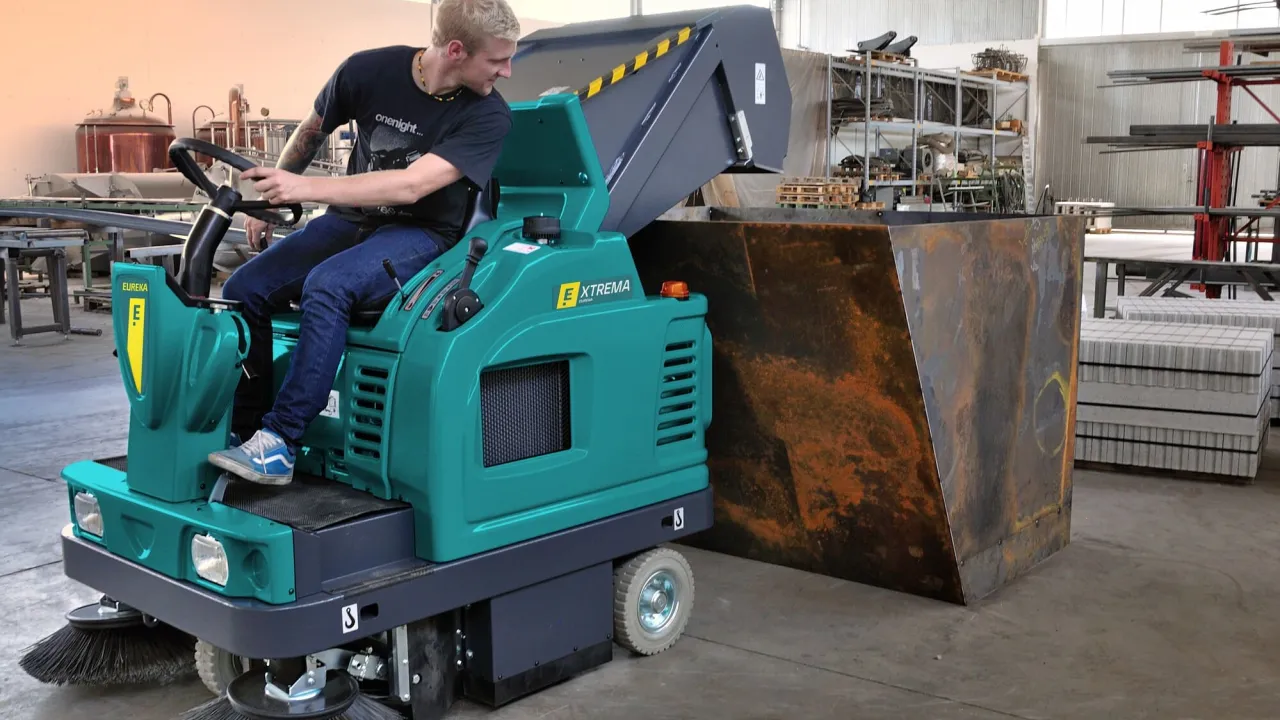
Thanks to the Overthrow system, waste collection is located at the rear of the sweeper. This allows the driving seat to be placed at the front, giving a wider view of the working area.
This configuration also allows the hopper to be mounted higher up and a front flap to be fitted, so that even bulky debris like pallet fragments and packaging materials can be collected with ease.